
Global Research & Marketing Consultants

Author name: Mahnoor Malik

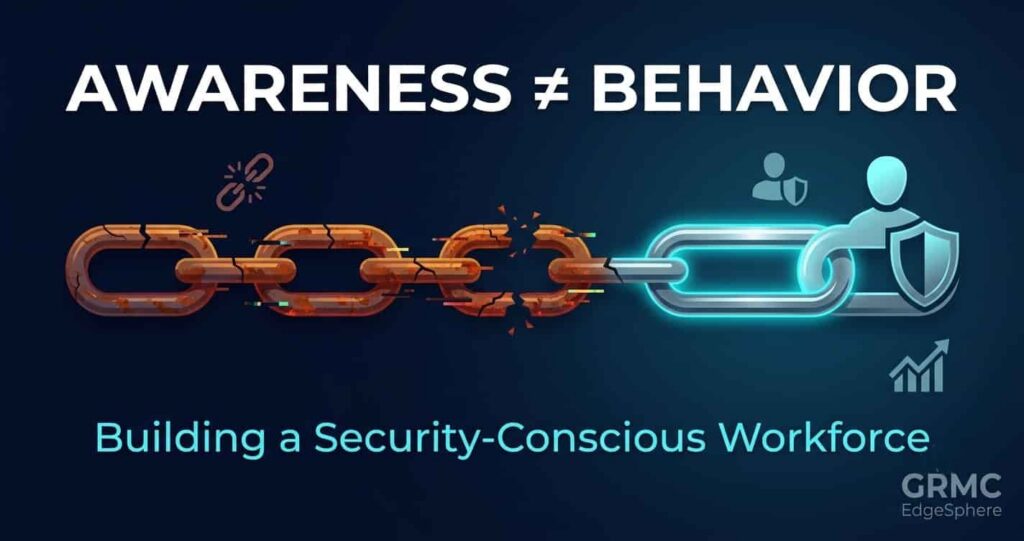
Why Security Awareness Training Fails—and How to Build a Security-Conscious Workforce

For years, organizations have poured billions into security awareness training, yet human error still accounts for an estimated 74% to 82% of data breaches. CEOs and CISOs alike are left wondering: if completion rates are hitting 100%, why are sophisticated incidents—the ones that cause sleepless nights—still traced back to user actions? The answer is uncomfortable […]

Why Security Awareness Training Fails—and How to Build a Security-Conscious Workforce Read More »

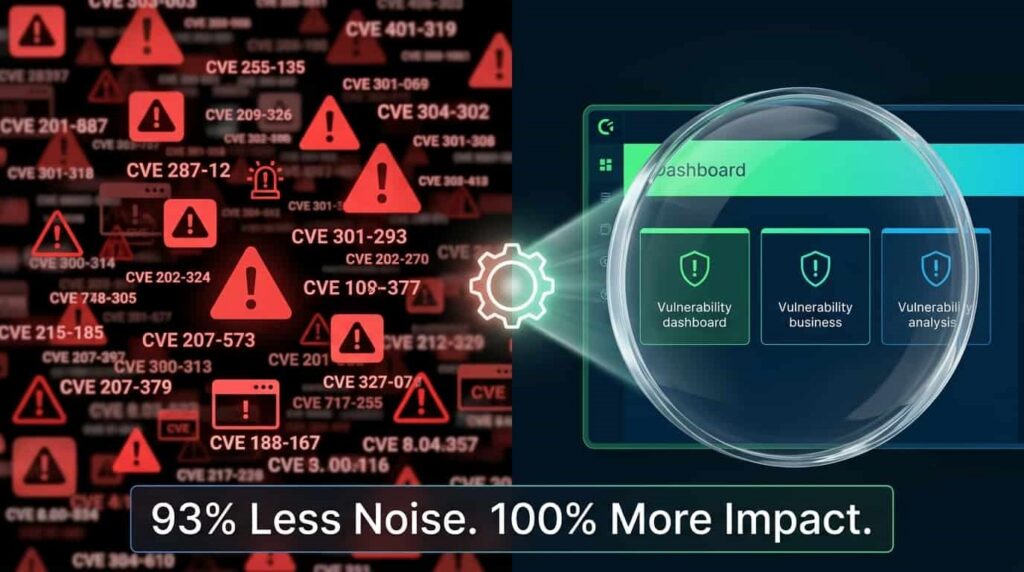
Vulnerability Management at Scale: Prioritizing Risks That Actually Impact Business Operations

The modern enterprise faces a fundamental paradox: the volume of detected vulnerabilities has reached staggering levels, yet the majority of security incidents stem from a tiny fraction of these findings. In 2025 alone, over 48,000 new CVEs were published . A typical enterprise scan cycle can generate more than 8,000 total vulnerability findings, with over 1,500

Vulnerability Management at Scale: Prioritizing Risks That Actually Impact Business Operations Read More »

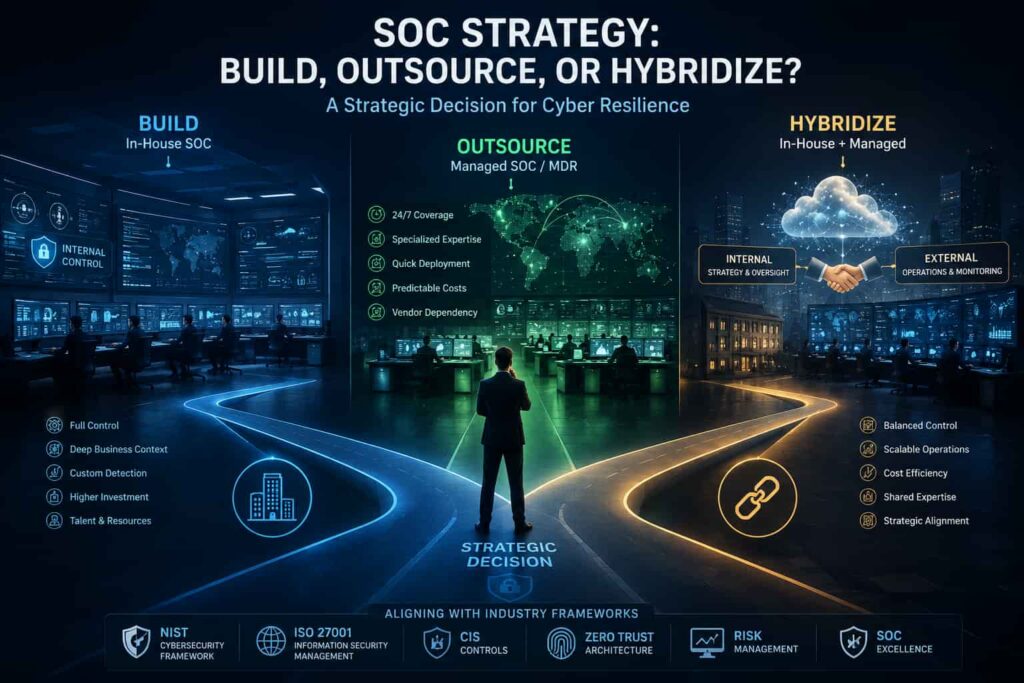
Security Operations Centers (SOC): Build, Outsource, or Hybridize? A Strategic Decision Guide

In today’s threat landscape, cyberattacks are no longer a matter of if but when. Ransomware, supply chain compromises, insider threats, and sophisticated nation-state attacks have significantly increased the need for continuous security monitoring. Organizations must be capable of detecting, analyzing, and responding to threats around the clock. A Security Operations Center (SOC) serves as the

Security Operations Centers (SOC): Build, Outsource, or Hybridize? A Strategic Decision Guide Read More »

AI-Powered Cyber Threats: Preparing for the Next Generation of Attacks

The cybersecurity landscape is no longer defined solely by human adversaries. Today, organizations face a new era of threats—augmented, accelerated, and automated by artificial intelligence. As a senior CISO advisor, I’ve observed that traditional security postures are increasingly insufficient against attacks that adapt in real-time and exploit vulnerabilities at machine speed. For enterprises, governments, and

AI-Powered Cyber Threats: Preparing for the Next Generation of Attacks Read More »

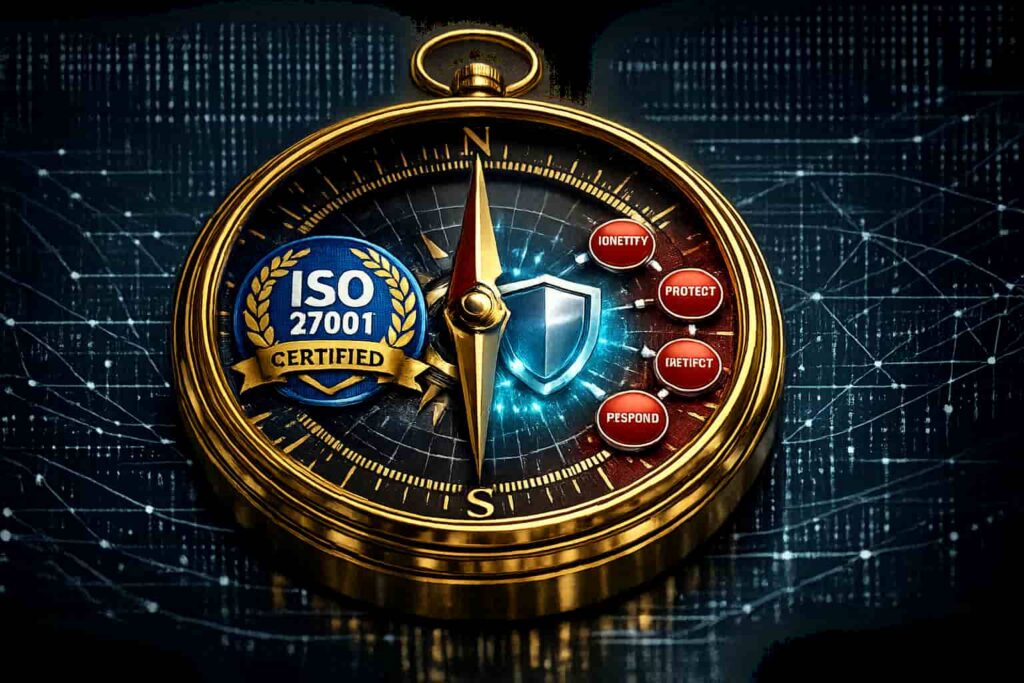
Aligning ISO 27001 and NIST Frameworks to Strengthen Enterprise Security Governance

An Executive Perspective from GRMC EdgeSphere For today’s CEOs, CIOs, CTOs, and CISOs, the question is no longer if a robust cybersecurity framework is needed, but which one will provide the most resilient and defensible posture. The two most prominent frameworks—ISO 27001 and the NIST Cybersecurity Framework (CSF)—offer distinct but complementary paths to security excellence. At GRMC EdgeSphere, our

Aligning ISO 27001 and NIST Frameworks to Strengthen Enterprise Security Governance Read More »

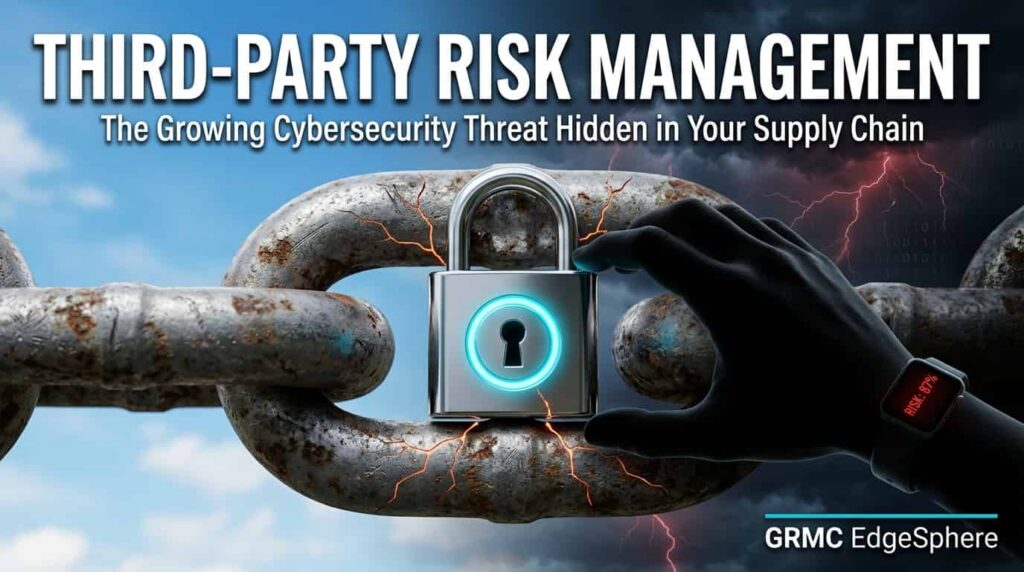
Third-Party Risk Management: The Growing Cybersecurity Threat Hidden in Your Supply Chain

The Invisible Perimeter: Why Your Supply Chain is the New Battleground In today’s hyper-connected business environment, an organization’s cybersecurity posture is inextricably linked to that of its vendors, suppliers, and partners. The traditional security perimeter has evaporated, giving rise to a complex web of third-party relationships that often operate with privileged access to your critical

Third-Party Risk Management: The Growing Cybersecurity Threat Hidden in Your Supply Chain Read More »

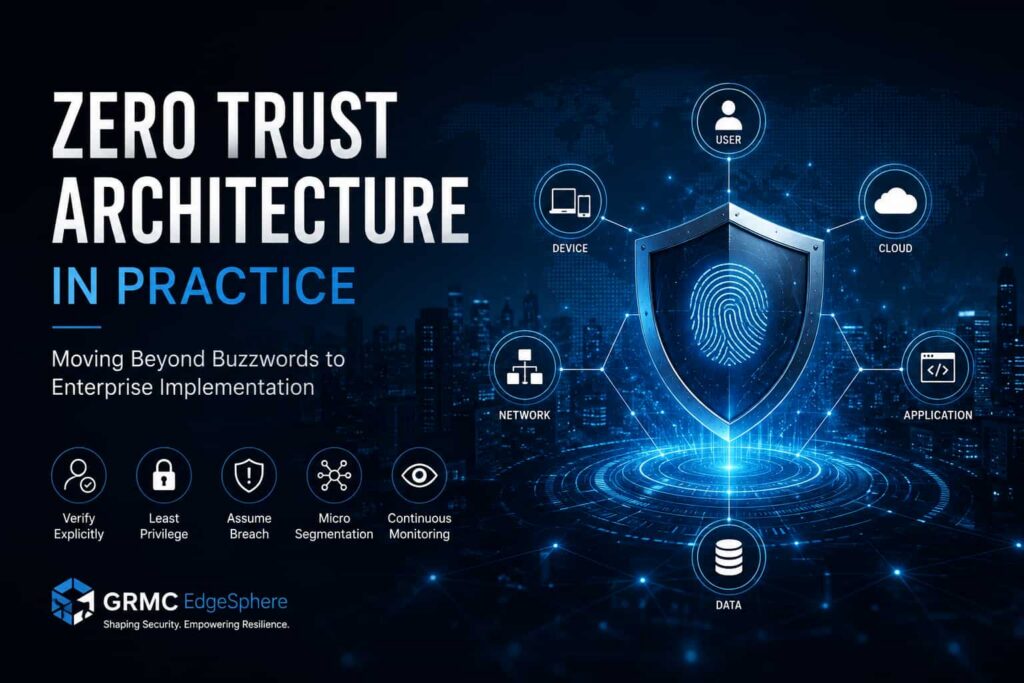
Zero Trust Architecture in Practice: Moving Beyond Buzzwords to Enterprise Implementation

In today’s threat landscape, perimeter-based security models are no longer sufficient. Modern enterprises operate in hybrid environments—spanning cloud, on-premises infrastructure, SaaS applications, remote workforces, and third-party integrations. This expanded attack surface demands a fundamental shift in security philosophy. Zero Trust Architecture (ZTA) is often discussed in strategic cybersecurity conversations, but many organizations still struggle to

Zero Trust Architecture in Practice: Moving Beyond Buzzwords to Enterprise Implementation Read More »

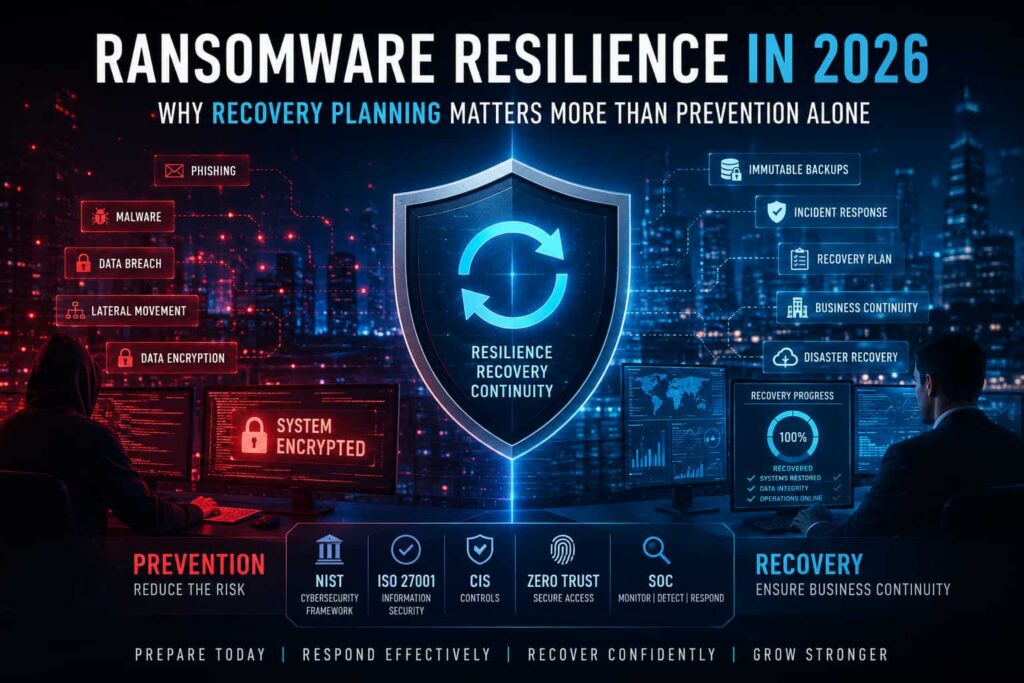
Ransomware Resilience in 2026: Why Recovery Planning Matters More Than Prevention Alone

Cyber Resilience Has Become the New Competitive Advantage For years, enterprise cybersecurity strategies focused on a single objective: prevent attackers from entering the network. Organizations invested heavily in firewalls, endpoint protection, intrusion detection systems, employee awareness training, and sophisticated threat intelligence platforms. While these investments remain essential, the cyber threat landscape of 2026 has made

Ransomware Resilience in 2026: Why Recovery Planning Matters More Than Prevention Alone Read More »

Cybersecurity as a Business Risk: What Boards and Executives Need to Measure Beyond Compliance

Compliance Is Not Cybersecurity For many organizations, cybersecurity discussions in the boardroom revolve around compliance requirements, audit findings, regulatory obligations, and certification status. While compliance frameworks such as ISO 27001, NIST Cybersecurity Framework (CSF), PCI DSS, HIPAA, and industry-specific regulations remain important, they represent only the minimum baseline for security governance. Today’s threat landscape has

Cybersecurity as a Business Risk: What Boards and Executives Need to Measure Beyond Compliance Read More »

Executive Guide to Generative AI Governance: Balancing Innovation, Risk, and Business Outcomes

Why Generative AI Governance Has Become a Boardroom Priority Generative AI is rapidly transforming how organizations operate, innovate, and compete. From intelligent customer service and automated content generation to software development assistance and enterprise knowledge management, AI is creating new opportunities for efficiency and growth. However, as organizations accelerate AI adoption, executives face a critical

Executive Guide to Generative AI Governance: Balancing Innovation, Risk, and Business Outcomes Read More »