

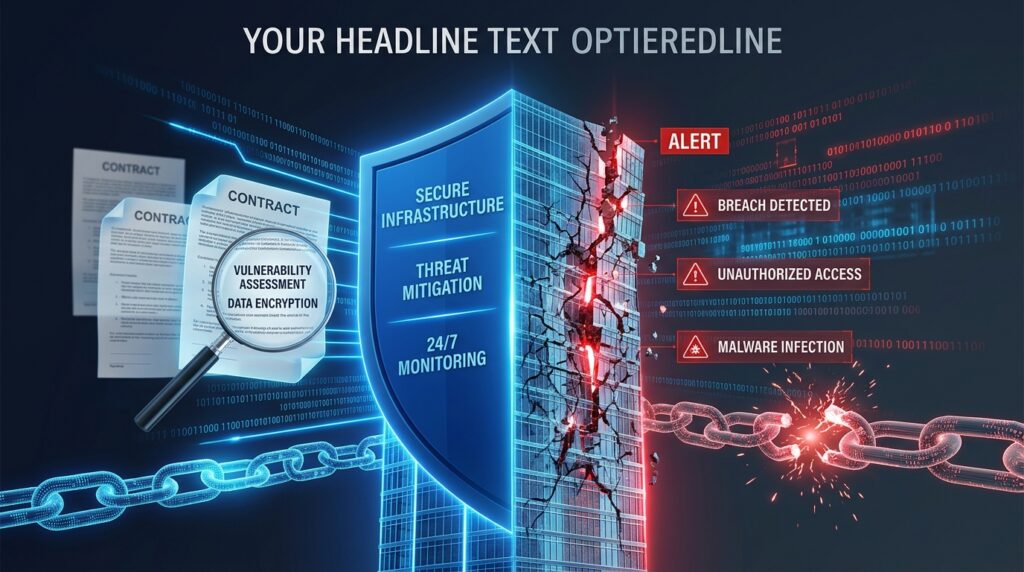
In the high-stakes arena of mergers and acquisitions, the focus is traditionally on financials, market synergies, and operational integration. Yet, a shadow risk lurks beneath the surface, capable of eroding value, derailing integration, and damaging reputation long after the ink has dried: cybersecurity.
For CEOs, CIOs, and CISOs, the message is clear: cyber risk is business risk, and in M&A, you are not just buying assets and market share—you are inheriting an entire digital footprint, complete with all its vulnerabilities and potential liabilities . As a senior Cybersecurity Consultant and Risk Management Specialist at GRMC EdgeSphere, I advise enterprise leaders that a robust cybersecurity due diligence framework is no longer a “nice-to-have” compliance workstream; it is a critical determinant of deal success.
This article explores the hidden liabilities that frequently sabotage M&A transactions and provides a strategic roadmap for navigating the complex cybersecurity landscape.
The High Cost of Neglect: Why M&A is a Prime Target
The M&A process creates a perfect storm for cybercriminals and adversarial actors. The environment is characterized by compressed timelines, organizational distraction, fluid user access rights, and the movement of vast amounts of sensitive data .
- Operational Disruption: The post-announcement period makes companies particularly vulnerable. Hackers anticipate that organizations are more concerned with business continuity and integration than with security, making them prime targets for ransomware attacks. The pressure to avoid disruption can make acquirers more likely to pay ransoms .
- The Espionage Window: The virtual data room (VDR), a repository of a target company’s most sensitive information, becomes a high-value target. Nation-state actors and insider traders view this window of deliberate openness as a prime opportunity for espionage .
- Inherited Liabilities: Perhaps the most significant risk is inheriting the target’s historical security failures. The infamous Marriott-Starwood breach serves as a cautionary tale. Marriott acquired Starwood in 2016, only to discover years later that Starwood’s reservation system had been compromised since 2014. This inherited vulnerability exposed the data of over 339 million customers and resulted in an £18.4 million fine . In another case, undisclosed breaches at Yahoo led to a $350 million price reduction in its deal with Verizon .
These cases underscore a harsh reality: an undetected intrusion or a legacy vulnerability doesn’t stay in the past; it becomes your problem on Day One.
A Framework for Assessing Hidden Liabilities
Effective cyber due diligence is a deep dive, not a checkbox exercise. At GRMC EdgeSphere, we advocate for a structured, risk-based approach that aligns with frameworks like the NIST Cybersecurity Framework and ISO 27001 . The goal is to uncover the “unknown unknowns” that can kill a deal.
1. Governance, Policy, & Maturity
The journey begins with an assessment of the target’s security culture and leadership commitment. Does the organization have a designated CISO? Is there a documented security strategy that aligns with business objectives? A mature target should demonstrate clear governance structures and accountability, indicating a proactive approach to security .
2. Technical Controls & Attack Surface Discovery
This is where the true risk often lies. It is critical to go beyond self-reported security scores or questionnaires, which measure perception, not reality . We focus on:
- Attack Surface Mapping: Many targets have a larger, more complex attack surface than they realize. Through advanced techniques like External Attack Surface Management (EASM), we consistently discover 30-40% more exposed assets than an organization’s declared inventory, identifying forgotten systems, unpatched vulnerabilities, and unknown cloud instances .
- Identity & Access Management (IAM): Immature IAM systems are a leading cause of breaches. We scrutinize privilege levels, guest accounts, and the implementation of Multi-Factor Authentication (MFA) and Zero Trust principles .
- Vulnerability & Threat History: A comprehensive review of penetration test results, audit findings, and incident response logs is essential. The absence of known incidents is not an indicator of security; it may simply mean threats have not yet been discovered .
3. Compliance & Regulatory Exposure
Ignorance is no defense. Acquiring a target with unresolved compliance gaps means inheriting significant legal and financial risk. Dealmakers must assess the target’s compliance posture against relevant regulations such as the EU’s GDPR, CCPA, HIPAA, and emerging frameworks like the EU’s NIS2 Directive and Cyber Resilience Act (CRA) . Non-compliance can lead to fines, operational disruption, and market access barriers .
4. Supply Chain & Third-Party Risk
An organization is only as secure as its weakest third-party link. Due diligence must extend to the target’s key vendors and partners. Reviewing their certifications (like SOC 2), security clauses in contracts, and their own compliance history is vital to identify systemic risks .
The Post-Deal Playbook: From Integration to Resilience
Cyber due diligence doesn’t end at the signing. The post-acquisition integration phase is where risks materialize or are mitigated. We recommend a structured approach with clear milestones :
- Day One: Preserve Key Resources & Visibility: Ensure continuity of security leadership and operations. Verify that critical vendor contracts are still valid and no key personnel are at risk of departing .
- Day 90: Strategic Review & Risk Assessment: Conduct a rapid, comprehensive review of the inherited IT stack, identifying the “crown jewels” and the most critical vulnerabilities that need immediate remediation. This is the time to begin harmonizing security policies and gaining real-time visibility into the integrated environment .
- Day 180: Modernization & Integration: Begin the work of consolidating and modernizing technology stacks, automating key security processes, and integrating the two security operations centers (SOCs) to create a unified, resilient security posture .
Conclusion: Turning Cyber Risk into Competitive Advantage
In today’s threat landscape, ignoring cybersecurity in M&A is a gamble with existential consequences. By embedding a rigorous, framework-based cybersecurity due diligence process—from pre-deal reconnaissance to post-deal integration—organizations can protect their investments, ensure regulatory compliance, and build a resilient foundation for future growth.
At GRMC EdgeSphere, our mission is to empower your leadership with the insight and actionable intelligence needed to navigate these complex challenges. We bridge the gap between technical risk and business strategy, ensuring that your next transaction is built for success, not burdened by hidden liabilities.