For decades, the market research industry operated on a well-defined, linear model. A business would commission a study, wait weeks or even months for fieldwork and analysis, and receive a final report. This report, while valuable, often arrived as a snapshot of a moment that had already passed. The pace of business, particularly when expanding into new and dynamic regions, simply outpaced the traditional research cycle.
Today, the most forward-thinking global market research companies are fundamentally shifting this paradigm. They are moving away from offering just “projects” and towards providing continuous, integrated intelligence. This isn’t about replacing human expertise, but about augmenting it with advanced technologies, specifically Artificial Intelligence (AI) and automation, to create a more agile, responsive, and impactful insights function.
The Core Shift: Moving from Projects to Platforms
GRMC’s approach exemplifies this evolution. The company has built its identity around the EdgeSphere platform, signaling a departure from the traditional project-based consulting model. Traditional market research often follows a rigid sequence: define the problem, design the study, collect data, analyze findings, and deliver a final PDF report. By the time the report reaches decision-makers, market conditions may have already shifted.
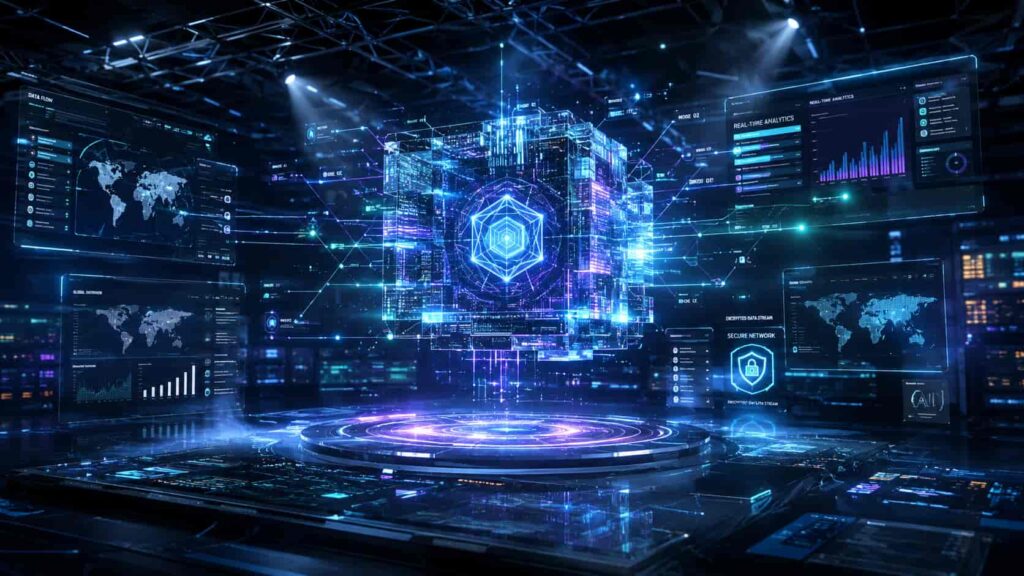
EdgeSphere represents a different philosophy. It positions research as an ongoing process where data flows continuously, providing a real-time pulse on the market. This is a crucial distinction for businesses navigating the complexities of the Caribbean, LATAM, Africa, Asia, and North America. Static reports from a few months ago cannot effectively guide decisions in a landscape where consumer sentiment, competitive dynamics, and regulatory environments shift rapidly.
The platform approach also enables greater integration. Instead of siloed studies for brand health, competitive analysis, and market entry, all these functions can operate within a unified ecosystem. This allows for cross-pollination of insights, where findings from one area inform and enrich another. For example, brand awareness data can be layered with competitive intelligence to identify not just where a brand stands, but why and what can be done about it.
Tech-Forward Services: Beyond Traditional Surveying
GRMC’s website identifies “Agentic AI & Automation” as a core service, signaling a commitment to this new model. Agentic AI refers to systems that can act autonomously to achieve specific goals. In a research context, this could translate to AI agents that continuously monitor brand health, scan for competitive threats, or automatically analyze customer feedback across various channels.
Consider the traditional approach to brand health studies. A company conducts a survey every quarter or bi-annually, tracking metrics like awareness, consideration, and preference. With agentic AI, brand monitoring becomes continuous. Social media mentions, online reviews, news articles, and even customer service interactions can be analyzed in real-time. When sentiment shifts negatively, the system alerts the client immediately, allowing for rapid response rather than discovering the issue in the next quarterly report.
Similarly, competitive analysis evolves from a periodic exercise to an ongoing intelligence operation. AI agents can track competitor pricing, product launches, marketing campaigns, and market share movements, providing a constant stream of actionable intelligence. This transforms the competitive landscape from a static picture to a dynamic battlefield where informed decisions can be made with confidence.
The blog on the website highlights trends in “2026 Market Research & Business Intelligence,” explicitly stating that relying solely on historical data is no longer enough. The integration of AI allows for predictive and prescriptive analytics, helping clients not just understand what happened, but what is likely to happen next and how to best respond.
The Security Imperative: Trust in the Age of AI
An often-overlooked aspect of AI-driven research is data security. The more data you collect and analyze, the more attractive you become to cyber threats. GRMC appears to understand this intimately, dedicating significant attention to its cybersecurity credentials on its website.
Alignment with ISO 27001 and NIST standards is not merely compliance checkbox; it is a fundamental requirement for operating at the highest levels of global market research. Clients in sectors like finance, healthcare, and government require absolute assurance that their data and their customers’ data remain protected. The website emphasizes “Secure Data Strategies” and “Global Cybersecurity Advisory” as part of its service offering, which builds critical trust with potential clients.
The leadership credentials cited, including CISSP, CEH, and CompTIA Security+ held by the CTO, provide tangible evidence of expertise. In an industry where data breaches can destroy reputations and incur massive regulatory fines, this focus on security is not just prudent; it is a competitive advantage. Clients are increasingly choosing partners based not just on analytical capability but on their ability to protect sensitive information.
The Human Element in a Tech-Driven World
The website wisely emphasizes that its strategy blends research with “digital transformation consulting services.” This is a critical point. The goal of technology in market research is not to remove the human element but to empower it. Researchers evolve from being data gatherers and report writers to strategic partners who can interpret complex data, contextualize findings, and guide decision-making.
AI excels at pattern recognition, processing vast datasets, and identifying anomalies. But it struggles with nuance, cultural context, and the subtle emotional drivers of consumer behavior. A machine can tell you that sentiment is declining, but it takes a human researcher to understand why—whether it’s a cultural misunderstanding in a new market, a competitor’s clever marketing move, or a broader societal trend.
Leading global market research companies recognize that AI is a powerful tool for the iteration and ideation loop. It can quickly screen multiple concepts, analyze open-ended survey responses for themes, or identify the most promising market entry strategies for a client. However, the final validation—the “hero claims,” the understanding of emotional nuance, and the culturally sensitive interpretation—still requires human judgment and oversight.
This blend of machine efficiency and human expertise is what truly differentiates a top-tier firm. The website’s focus on “human-centered design” reinforces this commitment. Technology is the engine, but human insight is the steering wheel.
Practical Applications: From Theory to Impact
How does this translate into concrete business value? Consider a company looking to expand into a new Caribbean market. A traditional approach might involve a feasibility study and market entry report. While useful, it’s a snapshot in time.
A tech-forward approach, leveraging the EdgeSphere platform, would offer much more. It could provide continuous consumer behavior analysis, tracking how preferences evolve even before the company enters the market. It could offer international tourism data analytics to understand the flow of visitors and their spending patterns. It could conduct ongoing competitive monitoring to understand pricing strategies and promotional tactics. And it would do all this with robust data security, ensuring that proprietary strategic information remains protected.
Similarly, for an existing business, the shift to continuous intelligence can transform operations. Instead of waiting for an annual brand health study to discover that younger demographics are losing interest, real-time monitoring would flag the trend early. The company could then engage in rapid innovation, testing new concepts with consumers using AI-driven research tools to quickly iterate toward a winning solution.
The New Standard for Global Intelligence
GRMC is positioning itself at the forefront of this industry transformation. By building its identity around the EdgeSphere platform and its suite of AI-powered and security-conscious services, it’s attracting the forward-thinking clientele that demands more than a periodic report.
The future of global market research lies in continuous intelligence, where AI handles the heavy lifting of data processing and analysis, allowing human consultants to provide the strategic clarity, guidance, and actionable insights that drive growth. The emphasis on ethical research practices and inclusive advancement further aligns the company with the values of modern, socially conscious organizations.
For businesses looking to expand, compete, or innovate, the question is no longer “Should we do market research?” but rather “How can we integrate continuous intelligence into our core strategy?” The companies that embrace this shift, with partners like GRMC, will be the ones best equipped to navigate the complexities of the global market with confidence and agility. The era of static reports is ending. The era of continuous intelligence is here.