🌍 Introduction
One of the greatest challenges facing modern businesses is uncertainty. Customer expectations evolve rapidly, industries are transformed by emerging technologies, and economic conditions can change with little warning. Organizations that wait until demand becomes obvious often find themselves reacting to competitors instead of leading the market.
Successful businesses rarely rely on instinct alone. They make strategic decisions based on evidence, anticipating future demand through continuous market research, customer intelligence, economic analysis, and predictive business insights.
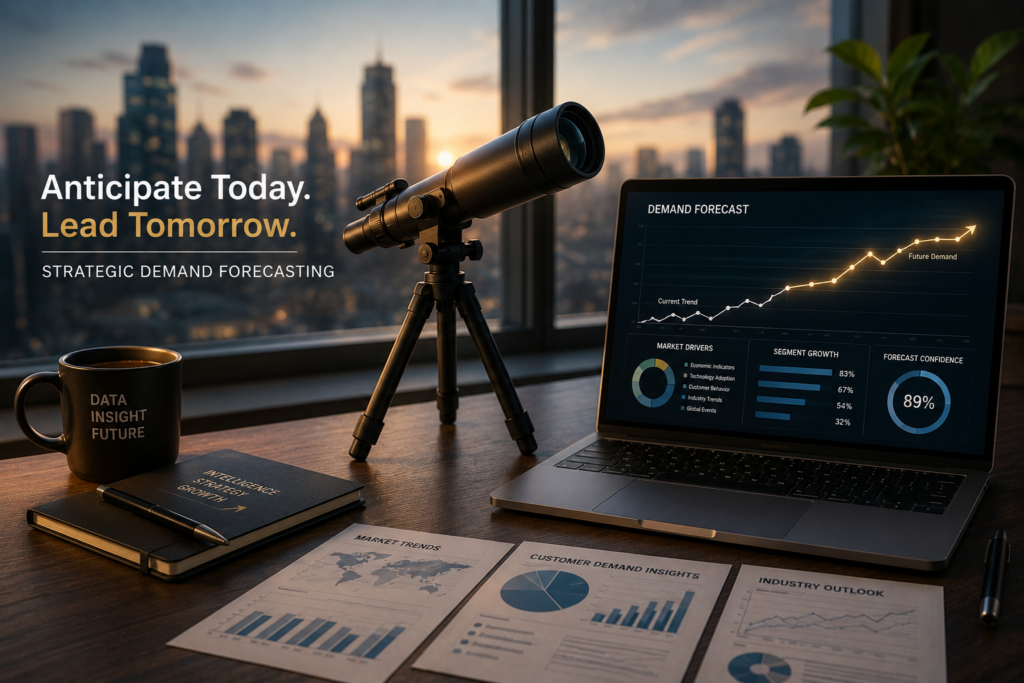
This proactive approach is known as Strategic Demand Forecasting.
Strategic Demand Forecasting is more than predicting future sales. It is a comprehensive business intelligence framework that helps organizations understand how changing customer behaviors, economic conditions, demographic trends, technological innovation, competitive activity, and industry developments influence future market demand.
Rather than asking “What are customers buying today?”, forward-thinking organizations ask:
- Which products or services will customers need next year?
- Which industries are experiencing the fastest demand growth?
- How will economic conditions influence purchasing decisions?
- Which customer segments are likely to expand?
- How can we prepare our business before demand changes?
By combining structured market research with advanced analytics, organizations can improve investment planning, optimize operations, reduce business risk, and gain a sustainable competitive advantage.
For CEOs, investors, government agencies, enterprise organizations, and business leaders, Strategic Demand Forecasting has become an essential component of long-term business strategy.
📊 Industry Overview
Business environments have become increasingly dynamic.
Digital transformation, artificial intelligence, sustainability initiatives, geopolitical developments, evolving regulations, and changing customer expectations are continuously reshaping markets around the world.
Traditional forecasting methods that rely solely on historical sales data often fail to capture these broader influences.
Modern organizations require forecasting models that integrate multiple sources of intelligence, including:
- Customer research
- Market trends
- Competitive intelligence
- Economic indicators
- Industry reports
- Digital behavior analytics
- Demographic changes
- Technology adoption
- Regulatory developments
- Consumer sentiment
By evaluating these interconnected factors, organizations gain a more accurate understanding of future market demand and can respond before competitors recognize emerging opportunities.
⚠️ Key Challenges
📉 Historical Data Has Limitations
Past performance provides valuable context but does not always predict future customer behavior.
Unexpected economic events, technological disruption, and changing consumer expectations can significantly alter demand patterns.
🔍 Demand Signals Are Often Subtle
Early indicators of changing customer behavior may appear months before they influence sales.
Organizations that fail to monitor these signals often miss valuable opportunities.
🌐 Market Conditions Change Rapidly
Global supply chains, regulatory changes, economic uncertainty, and competitive innovation require organizations to adjust demand forecasts continuously rather than annually.
👥 Customer Preferences Continue to Evolve
Customers increasingly expect personalization, digital convenience, sustainability, transparency, and seamless experiences.
Forecasting models must account for these changing expectations.
⏳ Delayed Planning Increases Business Risk
Organizations that react to demand changes after they occur often experience inventory challenges, operational inefficiencies, and missed revenue opportunities.
📈 Market Research Insights
📊 Customer Intelligence Improves Forecast Accuracy
Organizations that regularly monitor customer expectations, purchasing behavior, and emerging needs develop more reliable demand forecasts than those relying solely on historical sales data.
🌍 Economic Indicators Influence Market Demand
Interest rates, inflation, employment levels, business confidence, and consumer spending all influence purchasing behavior across industries.
Monitoring these indicators strengthens long-term planning.
📈 Competitive Intelligence Provides Early Warning
Competitor investments, pricing changes, product launches, partnerships, and expansion strategies frequently indicate future shifts in market demand.
👥 Technology Adoption Creates New Demand
Artificial intelligence, automation, cloud computing, cybersecurity, digital commerce, and advanced analytics continue to reshape customer expectations and generate entirely new market opportunities.
🤝 Continuous Forecasting Supports Business Agility
Organizations that update forecasts regularly are better equipped to adapt to changing market conditions, optimize investments, and respond confidently to uncertainty.
🛠️ Practical Recommendations
🔍 Combine Internal and External Intelligence
Integrate sales performance, customer feedback, operational metrics, market research, competitive intelligence, and economic data into a unified forecasting framework.
📊 Monitor Leading Indicators
Track customer inquiries, online search behavior, industry investments, technology adoption, demographic changes, and regulatory developments that may influence future demand.
👥 Segment Forecasts by Customer Group
Different industries, regions, and customer segments often experience varying demand patterns.
Develop forecasts tailored to each strategic market.
🌐 Build Multiple Business Scenarios
Prepare optimistic, moderate, and conservative forecasting models to improve resilience under changing market conditions.
📈 Review Forecasts Frequently
Forecasting should be an ongoing strategic process rather than a once-a-year planning exercise.
Regular reviews improve decision-making and organizational agility.
📋 Align Forecasting with Strategic Objectives
Ensure forecasting initiatives directly support investment planning, product development, market expansion, workforce planning, and long-term organizational goals.
🤝 How GRMC Can Help
GRMC EdgeSphere helps organizations improve forecasting accuracy through advanced market research, business intelligence, and strategic consulting.
📊 Demand Forecasting Research
We analyze customer behavior, market dynamics, economic conditions, and industry trends to provide reliable demand forecasts.
🔍 Competitive Intelligence
Our specialists monitor competitor activities, market developments, and emerging opportunities that influence future demand.
👥 Customer Insight Programs
GRMC delivers research into customer expectations, purchasing behavior, and market trends that strengthen forecasting accuracy.
🌍 Business Intelligence & Analytics
We combine internal operational data with external market intelligence to create actionable forecasting models for executive decision-making.
📈 Strategic Advisory
Our consultants help organizations transform forecasting insights into practical business strategies that improve investment confidence, operational efficiency, and sustainable growth.
🚀 Conclusion
Organizations that anticipate demand are better positioned to innovate, allocate resources effectively, strengthen customer relationships, and respond proactively to market change.
Strategic Demand Forecasting transforms forecasting from a financial exercise into a comprehensive business intelligence capability that supports informed decision-making across every level of the organization.
By integrating market research, customer intelligence, competitive analysis, and predictive analytics, businesses can reduce uncertainty, improve strategic planning, and capture emerging opportunities before competitors.
GRMC EdgeSphere empowers organizations to make forward-looking decisions through evidence-based market intelligence, helping enterprises prepare today for the opportunities of tomorrow.